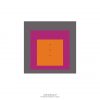
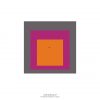
Yesterday, I tried to make an homage to Homage To A Square, a series of works that have become canonical among those who study the human perception of color. The artist (and my memory is failing me, but I will say Josef Albers accepting that I may be mistaken) reduced an almost infinite field of possibilities to a set of squares within squares. This harmonized with the Bauhausler’s “religious” elevation of platonic forms to iconic status. It also had pragmatic benefits. It allowed the comparison of like to like. It imposed a discipline that controlled the variables. The compositions were all the same size, and the size and placement of the squares never varied.
Krzysztof Lenk at RISD extended this method into the analysis of typography for screen-based HCI and UI. But I digress.
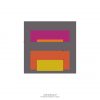
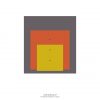
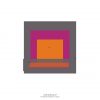
Here I’m observing the outcomes that reveal failures due to my laziness in doing arithmetic. It’s said that the best programmers deploy a studied laziness, mine here isn’t that kind. I was trying to automate the drawing of squares one on top of another, with three sprites drawing simultaneously. The first set worked as planned. The second iteration was offset in an unexpected way.
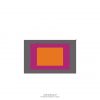
Also, it revealed a quirk of the device+software system. I had assumed that a line size of 1 meant that it would be 1 pixel wide. The lines are drawn, back and forth, in 1 pixel increments. It turns out that there is space between the lines, an effect that might get lost in Tumblr’s reprocessing and rescaling of images. At any rate, this gives a dimension of transparency to successive layers, something completely unintended, but that awakens me to other possibilities.