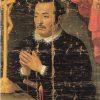
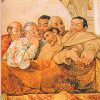
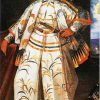
Hasekura Tsunenaga (1571-1622) a samurai in the service of Date Masamune, daimyo of Sendai, was one of the first people from Japan to make an official visit to Latin America. He traveled to Mexico and Cuba while on a historic diplomatic mission to Europe known now as the Keichō Embassy.
Hasekura (who was also referred to as Faxecura Rocuyemon in contemporary European chronicles of his visit) arrived in the port of Acapulco on January 1614 aboard the San Juan Bautista, one of Japan’s earliest Western-style ships. He was accompanied by the Franciscan Luis Sotelo and a group of over 100 men. Their visit to Mexico was documented by Chimalpahin Quauhtlehuanitzin, also known as Francisco de San Anton Muñón, who wrote a few Nahuatl-language chronicles of Mexican history in the early seventeenth century. After spending a few months in Mexico and meeting with the Viceroy of New Spain, Hasekura set off from the Mexican port of Veracruz with a few of his men. They stopped briefly in Havana, where a statue of Hasekura’s likeness stands today, a recent gift from the city of Sendai.
After arriving in Europe, Hasekura met with King Phillip III of Spain and Pope Paul V in 1615. He was also baptized into the Catholic faith that same year, taking the name Francisco Felipe. His visit was chronicled by a few European writers, and he was the subject of a number of paintings, where he was depicted with both Western and Japanese clothing. Hasekura returned to Japan in 1620, after having spent some time in Europe, crossing Mexico once more, and living in the Phillipines for over a year. During that time, the Tokugawa Shogunate had banned Christianity in Japan and began to move the country towards a period of isolation from the West.
Hasekura’s diplomatic mission was removed from official histories, only to be rediscovered in the nineteenth century during the Meiji era. Luis Sotelo, the Spanish Franciscan friar who accompanied Tsunenaga on his European voyage, was burned to death following his arrest in Japan in 1624 and was eventually beatified by Pope Pius IX in 1867. Hasekura himself died within two years of returning to Japan. The country’s next diplomatic mission to Europe would take place over two hundred years later.
Sources: 1, 2, 3, 4 (in Japanese, you can translate it on Chrome), 5 (Wikipedia).