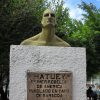
In 1511, Diego Velázquez set out from Hispaniola to conquer the island of Caobana (Cuba). He was preceded, however, by Hatuey, who fled Hispaniola with a party of four hundred in canoes and warned the inhabitants of Caobana about what to expect from the Spaniards.
Bartolomé de Las Casas later attributed the following speech to Hatuey. He showed the Taíno of Caobana a basket of gold and jewels, saying: “Here is the God the Spaniards worship. For these they fight and kill; for these they persecute us and that is why we have to throw them into the sea… They tell us, these tyrants, that they adore a God of peace and equality, and yet they usurp our land and make us their slaves. They speak to us of an immortal soul and of their eternal rewards and punishments, and yet they rob our belongings, seduce our women, violate our daughters. Incapable of matching us in valor, these cowards cover themselves with iron that our weapons cannot break…”
The people of Caobana could not believe Hatuey’s message, and few joined him to fight. Hatuey resorted to guerrilla tactics against the Spaniards, and was able to confine them to their fort at Baracoa. Eventually the Spaniards succeeded in capturing him.
On February 2, 1512, he was tied to a stake and burned alive at Yara.
Before he was burned, a priest asked him if he would accept Jesus and go to heaven. Las Casas recalled the reaction of the chief: [Hatuey], thinking a little, asked the religious man if Spaniards went to heaven. The religious man answered yes… The chief then said without further thought that he did not want to go there but to hell so as not to be where they were and where he would not see such cruel people.
He is celebrated as Cuba’s First National Hero and is also known as the First American Rebel.