ounu:
On Jorge Luis Borges’ creative process during his later years:
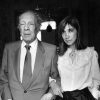
“María Kodama described for me how, later in life, the blind Borges composed. After a light breakfast, he would sit in a comfortable armchair, in his front room, at about nine in the morning. He would lean his head back. Sometimes, one of his cats would sit in his lap, and he would stroke it, very slowly, very rhythmically. Though he was blind and presumably had little need to, Borges would still close his eyes. A serene expression settled on his face, as if he was sleeping, but he wasn’t asleep. With his eyes closed, he would start nodding his head, inducing in himself a kind of trance, feeling the pulse of language he could hear somewhere in the depths, in his voice, his ‘other’ voice, the voice of the famous ‘other Borges.’
Sometimes, he would mutter to himself, repeating a line aloud, in a whisper. Mostly, he dreamed away quietly. He would do this for about two hours, and then call for María Kodama—his secretary and platonic companion (only many years later would he marry her and make her the keeper of his estate, and his secrets). La Kodama would come into his study, the main room of his apartment, lined floor to ceiling, with easily two thousand books. Borges would begin dictating to her a whole stanza of seven, eight, or ten lines as if he were writing a poem, or it might be a complete paragraph, long or short, of an essay or rare new story Borges had spent those morning hours dreaming up, imagining, revising, and editing in his head. He dictated everything whole—finished—to María Kodama. The two of them would go to the dining room to eat lunch. After lunch and a short nap, Borges would work for about another two hours, dictate another stanza or paragraph, then knock off at about 3:30, when he would prepare himself to entertain visitors.
After some time had gone by—usually months, sometimes years—Borges would make changes when lines were read back to him from these drafts. He seasoned his work, cut and revised, and applied writerly craft through multiple revisions. Borges knew that impatience is the enemy of art. Still, the first drafts were all mainly there, born out of his trance, those ‘dream tigers’ the writer could pad around with through his surreal and mythic landscapes. His works were drawn forth as if at will from sources directly related to his capacity to enter into dreams.”
—Douglas Unger, from his essay “On Inspiration: Thomas Wolfe, Jorge Luis Borges, & Raymond Carver,” in The Writer’s Chronicle (Vol. 42, No. 2, October/November 2009)
Photograph: Jorge Luis Borges and María Kodama, n.d.