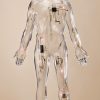
We Will End Disability by Becoming Cyborgs
–
Neural interfaces and prosthetics will do away with biology’s failings
–
Hugh Herr is a living exemplar of the maxim that the best way to predict the future is to invent it. At the age of 17, Herr was already an accomplished mountaineer, but during an ice-climbing expedition he lost his way in a blizzard and was stranded on a mountainside for three days. By the time rescuers found him, both of his legs were doomed by frostbite and had to be amputated below the knee. Once his scars healed, Herr spent months in rehab rooms trying out prosthetic legs, but he found them unacceptable: How could he climb with such clunky things? Surely, he thought, medical technologists could build replacement parts that wouldn’t slow him down.Today, three decades after his accident, Herr walks on bionic limbs of his own creation. As director of the biomechatronics group at the MIT Media Lab, Herr developed advanced prosthetics that he uses to walk, run, and even rock climb. And now, as he works with his colleagues to establish MIT’s new Center for Extreme Bionics, Herr is setting out not just to reinvent himself but the whole of society. “Fifty years out, I think we will have largely eliminated disability,” he declares, adding that he’s referring not just to physical disabilities but to many emotional and intellectual infirmities as well. (via We Will End Disability by Becoming Cyborgs – IEEE Spectrum)