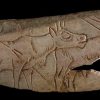
A staggering collection of ice age artefacts from museums across Europe will showcase the explosion of technical and imaginative skill that experts say marked the human race’s discovery of art Rail engineer Peccadeau de l’Isle was supervising track construction outside Toulouse in 1866 when he decided to take time off to indulge his hobby, archaeology. With a crew of helpers, he began excavating below a cliff near Montastruc, where he dug up an extraordinary prehistoric sculpture. It is known today as the Swimming Reindeer of Montastruc. Made from the 8in tip of a mammoth tusk, the carving, which is at least 13,000 years old, depicts two deer crossing a river. Their chins are raised and their antlers tipped back exactly as they would be when swimming. At least four different techniques were used to create this masterpiece: an axe trimmed the tusk, scrapers shaped its contours; iron oxide powder was used to polish it; and an engraving tool incised its eyes and other details. It is superbly crafted, wonderfully observed and shows that tens of thousands of years ago human beings had achieved a critical intellectual status. They had moved from making objects merely for physical use, such as stone axes, and had begun to create works that had no purpose other than to reflect the patterns and sights they were experiencing around them. Homo sapiens had discovered art. (via When Homo sapiens hit upon the power of art | Science | The Observer)