Beyond “The Selfish Gene” to “The Selfish Network”
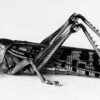
The grasshopper is the gene, and the locust is the networked swarm.
David Dobbs has a very interesting article out in Aeon about the incompleteness of “selfish gene” theory and the rise of an idea called “genetic accommodation”. Accommodation is the appearance of a trait, say larger muscles or faster running, in response to the environment, within a single generation (it sounds Lamarckian, but it’s not). Dobbs’ article is full of some pretty high-level biology, but it’s a very crucial lesson on the realities of natural selection in complex creatures and complex populations.
Chances are, if you’re a student of genetics and evolution, you know about Richard Dawkins and “the selfish gene”. This theory, and the book of the same name, places the gene at the center of evolution, and presents the organism, you or I, as vehicles for their replication and selection. It is beautifully written, well thought-out, and it made Dawkins the star he is today.
Unfortunately, the idea of “selfish genes” is incomplete, at least according to many modern evolutionary biologists. In complex creatures, there are a host of changes in appearance, ability and behavior (so-called “phenotypes”) that do not result from discrete genetic mutations, but rather from changes in how those genes are expressed, and these often show in the same generation, not just in offspring.
Dobbs gives us the example of the locust and the grasshopper, which ( I did not know this), are the same species! When food goes scarce, the lone hopper morphs into a swarming species that can lay waste to fields at Biblical proportions. These changes are not at the level of DNA changes within the gene, they manifest in how that DNA is read and turned into proteins or whatever the gene product turns out to be.
There are two important keys here: 1) Genomes are full of mutations and differences, most of which are silent and don’t contribute to natural selection, and 2) in complicated creatures such as us, genes are subject to complex, squishy, variable networks, and it’s mutations in many genes within and between networks that often lead to phenotypes.
That’s an incomplete oversimplification itself, but if you’d like to dig deeper, read this PZ Myers piece on how evolution is about networks. As for me? I’ve studied molecular genetics for about ten years now, and while Dobbs is right that the simple “selfish gene” idea needs work, gene expression differences are also dependent on genes, and those genes can be mutated and selected, or not, so after a while this whole networked snake begins to eat its own tail.
Evolution is hard. Most people, if they even accept it, don’t get far enough in biology classes to see just how hard it is. In school, we begin our study of genetics with the study of Mendel’s peas, a simple and idealized example to demonstrate how statistics and ratios are at play in the distribution of genes. But then almost instantly, if we go on with our studies, we learn that these idealized scenarios are incomplete, and that’s not how the real world of natural selection and population genetics works. So we look for where our rules are broken, and we apply new, often complex, rules to fill in the gaps.
This is how science itself works. Our idealized classroom scenarios, like Dawkins’ “selfish gene” or Mendel’s peas, are important tools to have in our toolbox, but they are incomplete. It is important that learn to identify their deficiencies, and to use new observations to create new tools … and with them we are always working to build a better house.
Which we then hope is not flattened by a locust swarm.
Check out Die, Selfish Gene, Die by David Dobbs. What do you think?